Facebook Ads for HVAC Companies: Filling the Schedule Between Heat Waves and Cold Snaps
How HVAC companies use Facebook ads in spring and fall: tune-up offers, maintenance plans, replacement quotes, lead form questions and a worked budget example.

Facebook ads for HVAC companies earn their money in the shoulder seasons, not in the middle of a heat wave. In spring and fall, nothing is breaking and the phone goes quiet. That is when you run ads for tune-ups, maintenance plans and replacement quotes to homeowners in your service area. Pair those ads with a lead form that asks about system age, home ownership and timing. The jobs you book in April and October fill the weeks the weather leaves empty. The maintenance plans you sell give you visits you can place into the next slow stretch.
In short:
- Facebook is weak at catching emergency no-cool and no-heat calls, because people with a broken system search on Google, but it is strong at creating planned work before anything breaks.
- Three offers fill an HVAC schedule between peaks: a priced seasonal tune-up, a maintenance plan sold as priority service, and a replacement quote for aging systems.
- A lead form that asks what the customer needs, how old the system is and whether they own the home costs you some lead volume and saves your office hours of calls to people you can't serve.
When should an HVAC company run Facebook ads: during the peaks or between them?
Run them hardest between the peaks. In July and January the weather fills your phone for you. A Facebook ad can't make a compressor fail. When an AC dies at 9 p.m., the homeowner doesn't scroll Instagram hoping to see an HVAC ad. They type "AC repair near me" into Google and call the first company that answers.
Facebook does something different. It puts a reasonable offer in front of a homeowner who wasn't thinking about HVAC at all, at a moment when you have open slots. That makes it a tool for building planned work. Many HVAC owners judge Facebook by how many emergency calls it brings, decide it doesn't work, and switch it off. That is the wrong test. Judge it by how many tune-ups, plan signups and replacement quotes it puts on the calendar in March, April, September and October.
Here is how we map the year for a typical company with both cooling and heating seasons:
| Period | What's happening | What to advertise on Facebook | Budget posture |
|---|---|---|---|
| March to May | Spring shoulder, AC not running yet | AC tune-up, maintenance plan signup, replacement quotes for old AC units | Full budget, this is your main window |
| June to August | Cooling peak, repair calls come on their own | Maintenance plan (priority service), replacement quotes | Lower if you're booked out, keep campaigns running |
| September to October | Fall shoulder, heat not running yet | Furnace or heat pump tune-up, plan renewals, replace-before-winter quotes | Full budget, second main window |
| November to February | Heating peak in cold climates | Replacement quotes, plan signups, indoor air quality | Depends on climate and how booked you are |
Adjust the calendar to your climate. A company in Arizona has a long cooling season and a short, mild heating season. A company in Minnesota is the reverse. The principle stays the same: Facebook spend goes up when the weather stops sending you work, and down when it starts again.
What should an HVAC company advertise on Facebook in the off-season?
Advertise one concrete, priced, bookable thing per season, with a booking window. "Heating and cooling services you can trust" is not an offer. "AC tune-up, $99, 21-point check, booking April and May in [your town]" is an offer. People respond to something they can picture and say yes to in one tap.
The four offers that work between peaks:
- Spring AC tune-up. Priced, with a short list of what's included, offered before the first hot week.
- Fall furnace or heat pump tune-up. Same structure, offered before the first cold night.
- Maintenance plan. Sold all year, with extra push in the shoulder seasons (more on this below).
- Replacement quote or second opinion. For systems that are old enough that the owner already suspects the end is near.
Now for the part much of the industry won't say out loud. The $39 tune-up that exists only to get a salesperson into the living room is a bait offer. It brings cheap leads. It also brings homeowners who feel tricked the moment the tech starts talking about a new system. Then come the reviews that say so. We don't run those offers, and we'd tell any HVAC owner to stop.
Price the tune-up at roughly what it costs you to do the job properly. For example, say a proper tune-up costs you about $90 in tech time, drive time and materials. An ad at $99 with a clear checklist will bring fewer leads than one at $39. But the people who book it expect a real visit, and they trust your recommendations when you find something. Your replacement leads should come from honest findings during real tune-ups, not from a funnel built on a loss.
A tune-up offer that converts usually has five parts:
- The price, in the first line of the ad text.
- What's included, in 4 to 6 short items (coil cleaning, refrigerant check, electrical check, filter, thermostat test, written report).
- How long the visit takes.
- The booking window, such as "booking April and May", which gives a reason to act now without fake countdown timers.
- Who shows up: your name, your techs, your truck.
How do you sell HVAC maintenance plans with Facebook ads?
Sell the plan as priority service and scheduled visits, not as vague savings. A homeowner understands "members get booked first when the heat hits". They don't believe "save up to 30% on energy bills", and you can't prove it for their house anyway.
Plans matter more for scheduling than most owners realize. Plan visits are the only demand in your business that you control. Weather decides when repair calls come in. You decide when the 2 visits per year for each member happen.
For example: say you have 150 plan members at $199 a year, each with 2 visits. That is $29,850 in yearly plan revenue and 300 visits that you place into the slow weeks of April, May, September and October. Every member you add in spring is two future visits you can drop into a gap. Many plan members also become the first call when a repair or replacement is needed.
What a plan ad should say:
- What the member gets: 2 tune-ups a year, priority booking, no overtime charge, a repair discount if you offer one.
- The monthly or yearly price. Monthly often reads easier, such as "$17 a month".
- One reason to join now: "Join before June and your spring tune-up is the first visit."
The best audience for plan ads is people who already showed interest. That means anyone who filled your tune-up form, plus your existing customer list uploaded as a custom audience. Run a small plan campaign to them all year. A cold audience can work too, but warm people sign up for far less ad spend.
How should HVAC companies advertise system replacements on Facebook?
Advertise a free replacement quote or a second opinion to homeowners, and qualify hard in the form. Replacement is your high-ticket job. As an example, a single $9,000 install can pay for many months of ad spend. That is exactly why loose replacement leads are expensive: every unqualified quote visit costs a comfort advisor an hour or two.
Two angles we see work:
- "Is your system 12+ years old? Get a free replacement estimate before it fails in the heat." This speaks to people who already know their unit is old.
- "Told you need a new system? Get a free second opinion." This speaks to people holding a big quote from another company and not sure they trust it. It is an honest offer, and it positions you as the company that doesn't push.
Time replacement ads before the season, not during it. In spring, the owner of a 15-year-old AC still has time to compare quotes. In August, the same person takes whoever can install fastest, and that sale comes through the phone, not Facebook.
A warning about financing. Financing helps close replacements, but be careful about leading the ad with credit terms like "0% APR for 60 months". Meta may classify ads that promote credit offers under its credit special ad category. That category limits targeting options such as age and detailed audiences. Mention that financing is available in the ad text, keep the specific terms for the quote visit, and check Meta's current policy if financing is your main message.
What questions should an HVAC lead form ask?
Ask what they need, how old the system is, whether they own the home, their ZIP code and when they want the work done. Five questions, mostly tap-to-answer. Every question costs you some leads. These five pay for themselves because they let your office sort leads before anyone picks up the phone.
| Question | Answer options | Why it's there |
|---|---|---|
| What do you need? | Tune-up / Repair / Replacement quote / Maintenance plan | Routes the lead to the right person and price |
| How old is your system? | Under 5 years / 5 to 10 / 10 to 15 / Over 15 / Not sure | Flags replacement prospects inside tune-up leads |
| Do you own the home? | Yes / No, I rent | Renters can't approve a replacement and often can't book work |
| What's your ZIP code? | Short answer | Confirms the address is in your service area |
| When do you want this done? | This week / This month / Just researching | Tells your office who to call first |
Name, phone and email come prefilled from the person's Facebook profile. Ask the person to confirm their phone number. Wrong numbers are the most common reason a form lead goes nowhere.
Use the higher intent form type. It adds a review screen before submitting, which cuts down on accidental taps. If you've never set up an instant form, our guide to Facebook lead forms that bring real customers instead of junk leads walks through each setting.
One mistake we see often is asking for a preferred appointment time in the form. People pick a slot, assume it's booked, and get annoyed when your office calls to move it. Ask about timing in broad terms and confirm the actual slot on the phone.
What should HVAC ad creatives look like?
They should look like your company, shot on a phone. Real trucks, real techs, real equipment. A homeowner deciding whether to let a stranger into their house wants to see who will show up. Stock photos of a smiling model next to a spotless condenser tell them nothing.
Creatives we'd start with for a tune-up campaign:
- A 15 to 30 second video of a tech in front of an outdoor unit saying what the tune-up includes and what it costs. No script polish needed. Clear audio matters more than lighting.
- A before and after photo of a dirty coil or a clogged filter next to a clean one. It shows the value of the visit without a single word.
- A photo of your crew or truck with the offer as a short text overlay: "AC tune-up $99, booking April and May."
- For plans: a simple graphic with what members get, written as 3 or 4 short lines.
The first line of the ad text should carry the offer and the area: "Spring AC tune-up in [town], $99." Keep the body short, with the checklist and the booking window. Change creatives with the season. A video of a tech at an AC condenser in October looks off. Shoot a furnace version in August so it's ready.
We'd skip scare tactics, such as carbon monoxide warnings written like news headlines. They may get clicks, but they attract anxious people looking for free safety checks, and they make your company look like the one that sells fear. If you do find a cracked heat exchanger on a visit, the customer will believe you more if your ads didn't cry wolf.
Expect each ad to wear out. The same people in a small service area see it again and again, and results drop after a few weeks. Plan on 3 to 5 ads running at once and fresh ones every few weeks.
How much should an HVAC company spend on Facebook ads, and what does a month look like?
Spend an amount you can keep running for at least 30 days, because a campaign that is changed or stopped every few days never gets past the learning phase. For a single-location HVAC company running one shoulder-season offer, a daily budget in the $30 to $50 range is a sensible place to start testing. Here is a worked example. Every number in this table is made up to show the mechanism. None of it is a result from our clients.
| Step | Example number |
|---|---|
| Daily budget | $40 |
| Spend over 30 days | $1,200 |
| Form leads reported by Meta | 40 |
| Cost per lead according to Meta | $30 |
| Leads reached, real, in service area | 28 |
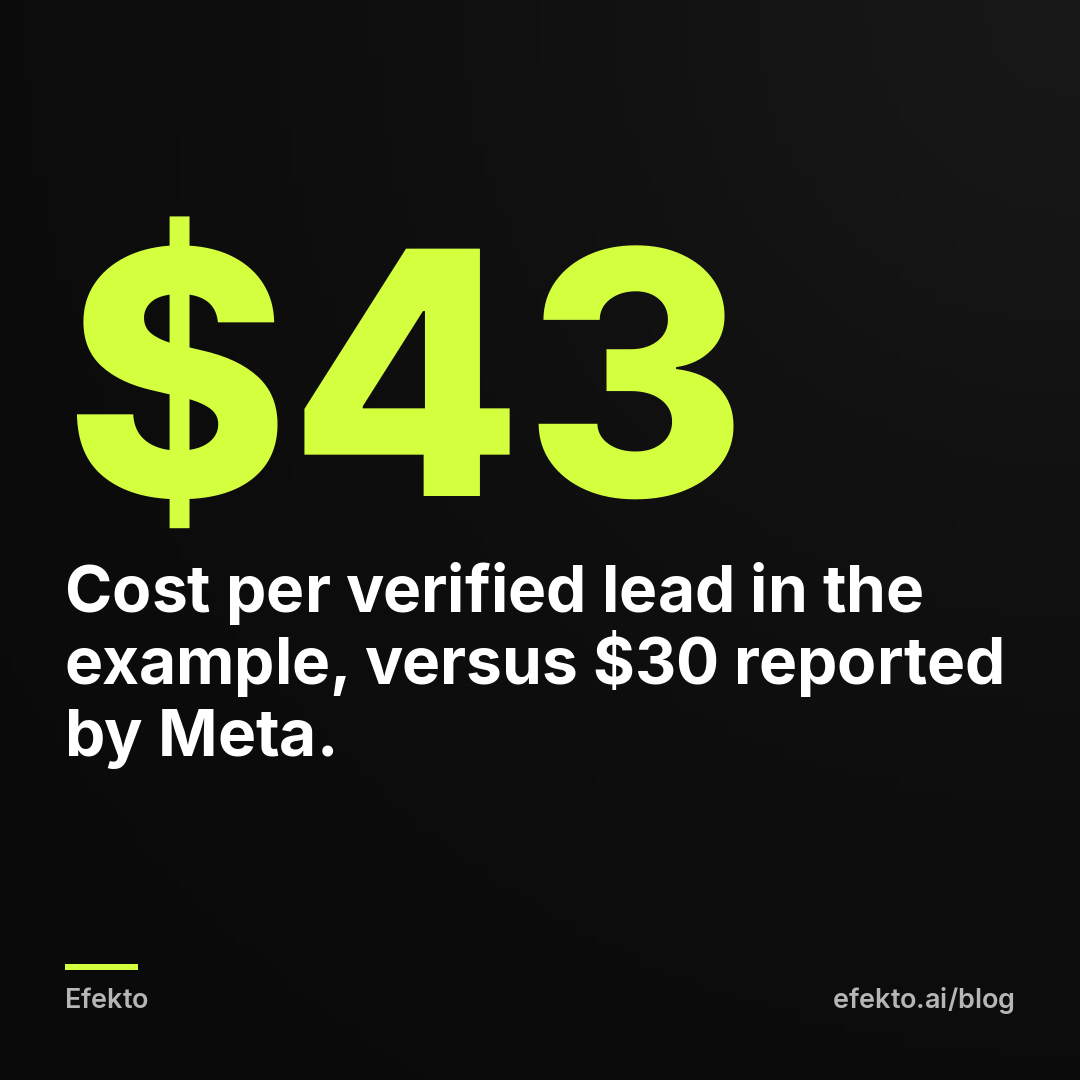
| Cost per verified lead | about $43 |
| Tune-ups booked (half of verified leads) | 14 |
| Tune-up revenue at $99 | $1,386 |
| Plan signups from those visits (4 at $199/year) | $796 per year |
| Replacement quotes from tune-up findings | 2 |
| Replacements closed | 1 at $9,000 |
Note the difference between $30 and $43. Ads Manager shows cost per lead as the cost of each form submission, before anyone checked it. Some submissions have a wrong phone number. Some are renters, some are outside your area, and some never pick up. Once your office has called everyone, the cost per real, reachable lead in your area is higher. In this example it is $1,200 divided by 28, about $43. If you compare your results with anyone else's, make sure you're comparing the same number.
Read the example honestly too. The $1,386 from tune-ups barely covers the $1,200 in ads before you count tech time. Tune-ups at a fair price are a break-even way to get into homes. The profit comes from plan members you'll serve for years and from the replacement that a real tune-up uncovers. If you judge the campaign only by tune-up revenue in the first month, you'll shut down the part of your business that feeds everything else.
Our article on what counts as a good cost per lead for a local business goes deeper into working out the number your business can afford.
How do you keep Facebook ads working when the first heat wave hits?
Lower the budget and change the message, but don't switch the campaign off. When the first hot week arrives, your schedule fills with repair calls in days. Tune-up ads now bring people you can't serve for weeks.
Do three things:
- Cut the budget, don't stop it. For example, go from $40 to $20 a day. A paused campaign that comes back in September has to learn again from scratch. The cost of pausing isn't dollars, because a paused ad spends nothing. The cost is the leads you don't get in the meantime, plus a week or two of weaker results while the campaign relearns.
- Swap the offer. Pause the tune-up ads and run plan ads ("members get booked first") and replacement quote ads. Those leads can wait a few weeks, and they are worth more.
- Tell people the truth about timing. If your next tune-up slot is in three weeks, say so in the form's intro screen. People who book with that knowledge show up. People who expected tomorrow cancel.
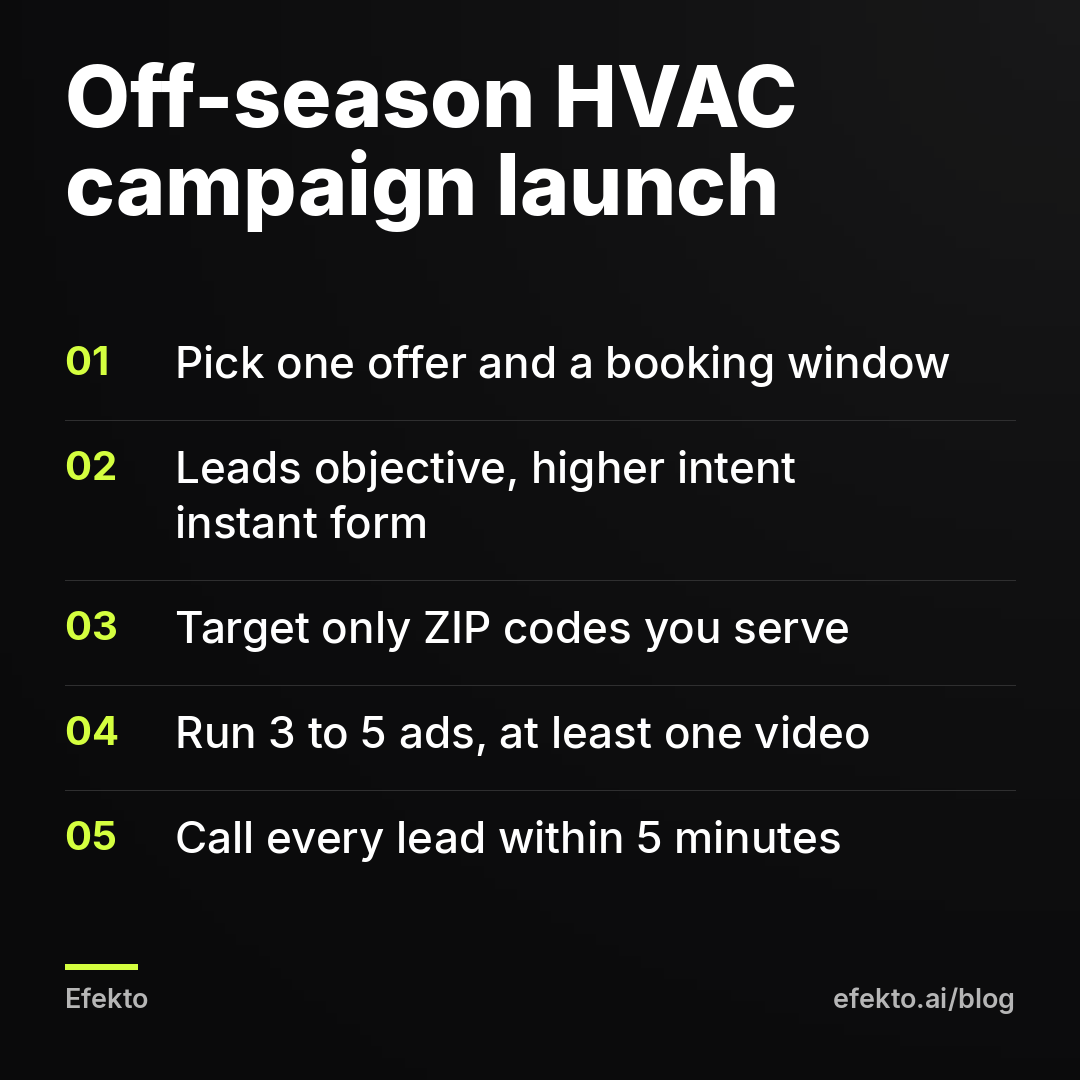
Peak season is also when slow follow-up kills the most leads. Your office is buried in repair calls, form leads sit for a day, and the homeowner books someone else. Assign one person to call every Facebook lead within 5 minutes during business hours, even in July. Our guide on following up on Facebook leads fast enough to book the job covers the setup, including instant text replies.
How do you launch an off-season HVAC campaign step by step?
Pick one offer with a booking window, build a higher intent lead form, target only the ZIP codes you serve, and run 3 to 5 ads for at least 30 days. In Ads Manager, the steps are:
- Choose the offer and the window. For example: AC tune-up, $99, booking April 1 to May 15. One campaign, one offer.
- Create the campaign. Objective: Leads. Conversion location: Instant forms. Form type: Higher intent.
- Set the location. Enter the ZIP codes you actually serve instead of a big radius around your shop. Leave out areas where the drive time eats your margin. The details are in our guide to targeting homeowners in your service area.
- Keep the audience broad. Don't stack interests like "home improvement". In a small local area, the form questions filter better than interest targeting.
- Build the form. Use the five questions from the table above, a short intro screen with the offer and the booking window, and a thank-you screen that says when you'll call.
- Upload 3 to 5 ads. At least one video and one before and after photo.
- Route the leads. Connect the form to email or text notifications, or to your CRM, so leads reach the person who calls them, not an inbox nobody checks.
- Review on a schedule. After 7 days, turn off ads that spent the most and brought nothing. After 30 days, judge the campaign on booked jobs and verified leads, not on clicks.
When are Facebook ads the wrong tool for an HVAC company?
When you can't handle the leads, or when the work you want is emergency work. We earn our living from ads on Facebook and Instagram, and our team has managed more than $1M in ad spend for clients. So take it seriously when we say these are the cases to spend elsewhere, or not at all:
- You're already booked out for weeks. Extra leads now turn into cancellations and bad reviews. Fix capacity first.
- Nobody answers the phone or calls leads back the same day. Form leads go cold within hours. Paying for leads your office doesn't call is the most common waste we see.
- You want emergency repair calls. That demand lives on Google search and Google Business Profile. Put that budget there.
- Your service area is a handful of small towns. If the population is too small, the same few thousand people see your ads every week and costs climb. Expand the area or run a small, steady plan campaign instead of a big push.
- You don't want to price anything in the ad. If your sales process depends on never quoting a number until someone is in the house, Facebook form leads will feel low quality to you. The ads that work here lead with a price.
Where does Efekto fit for an HVAC company?
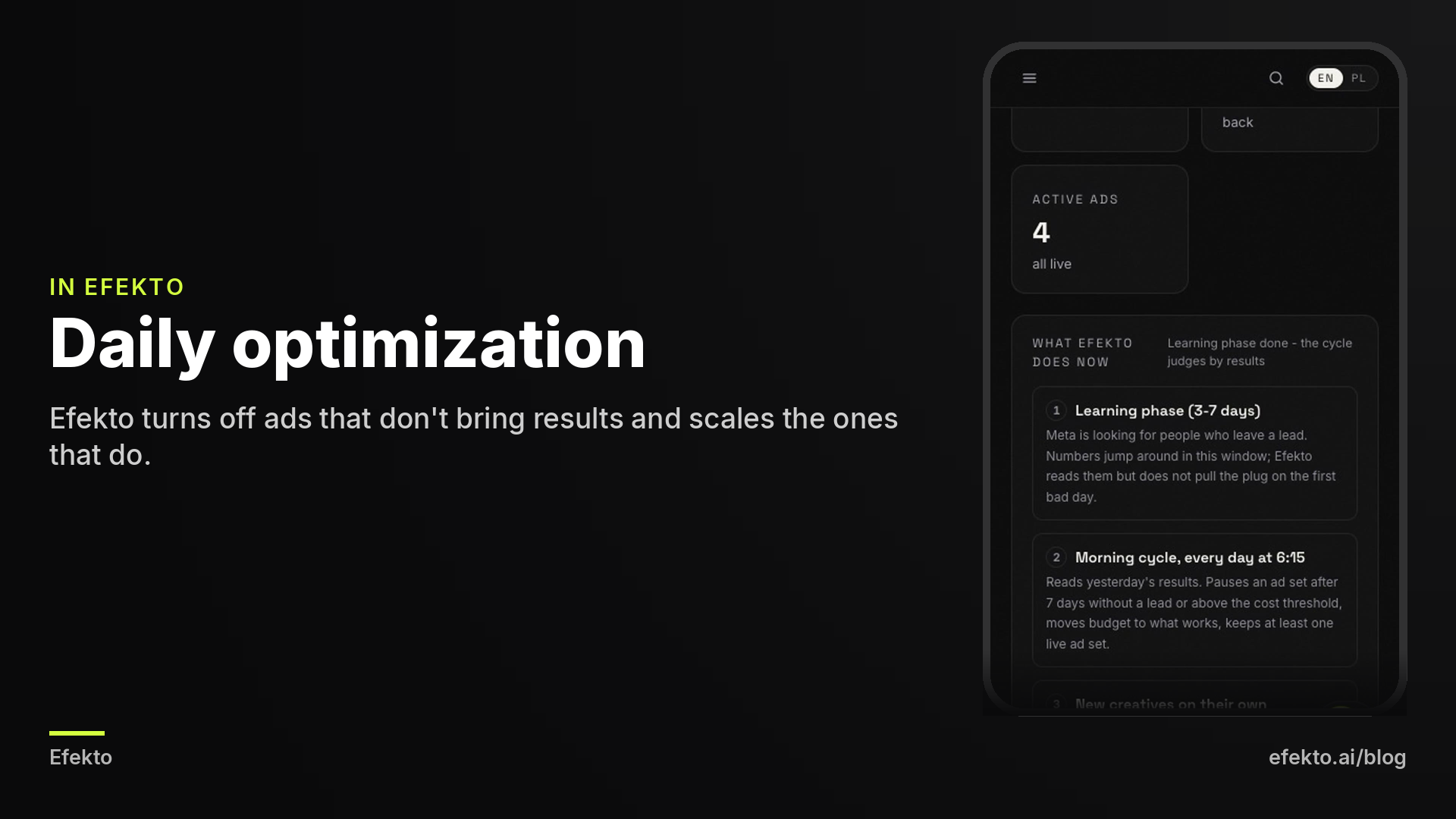
You can do everything in this article yourself in Ads Manager. Efekto is the option for owners who would rather spend those hours on jobs. Efekto creates ads from your website, publishes them, and optimizes them every day: it turns off the ones that don't bring results and scales the ones that do. You approve the first batch before anything goes live, with at least 5 approved ads before the campaign starts. The ads run on your own Facebook ad account or on an Efekto ad account with the budget topped up in advance. Details for this trade are on our page for HVAC companies using Efekto.
The numbers: the minimum ad budget in Efekto is $15 a day. The Starter plan is $149 a month for 1 campaign on Facebook and Instagram, and annual billing is 20% cheaper. The free trial lasts 7 days, counted from the launch of your first campaign. You don't need a card to sign up; you add it when you launch the campaign. Efekto doesn't make sense if you can't spend $15 a day on ads, if your office can't call leads back the same day, or if right now you want emergency calls from Google search more than planned work from Facebook. Google Ads arrives in the Growth plan from Nov 1, 2026, so until then that part of your marketing stays outside Efekto.
FAQ
Do Facebook ads work for emergency HVAC repair?
Not well. People with a broken AC or furnace search on Google and call immediately, so emergency demand is better served by Google search ads and your Google Business Profile. Use Facebook for planned work like tune-ups, plans and replacement quotes.
Should an HVAC company use Facebook lead forms or send people to its website?
For tune-ups and plans, instant lead forms usually bring more leads because people never leave Facebook, and the qualifying questions do the sorting. Send people to your website when it has online booking with real open slots, since a booked appointment beats a form you still have to call.
How long before an HVAC Facebook campaign brings booked jobs?
Form leads typically start within the first days. Plan on the first two to three weeks as a learning period and judge the campaign on booked jobs after about 30 days. That is also why the campaign should start a few weeks before your slow season, not when the schedule is already empty.
Can Facebook ads work if I serve only a few ZIP codes?
Yes, as long as enough homeowners live there. In a small area, keep the budget modest, refresh creatives more often because the same people see them repeatedly, and lean on plan offers to past customers. If costs keep climbing week after week, the area is too small for the budget.
If you'd rather have your tune-up, plan and replacement campaigns created and adjusted every day while you run the jobs, you can start the free trial at efekto.ai.
- Jakub Zwoliński
Founder, Lemon Agency · Efekto · October 24, 2026